Counting the Kilowatt-Hours Twice: Auditing a SMETS2 Meter Against a Calibrated Logger
Smart meters are often discussed as if they were a single instrument. In a UK home they are at least three: the meter itself, the in-home display (IHD) and the data that travels through the Data Communications Company (DCC) network to the supplier. Add a time-of-use tariff and a third-party energy monitor, and the scope for disagreement multiplies. To find out how much disagreement matters, CavLab logged a SMETS2 electricity meter, its IHD and a calibrated energy logger side by side for 30 days in October 2026. The aim was not to catch the meter out. It was to understand which number a household should trust for load shifting, and which is merely a convenience display.
The reference and the thing being tested
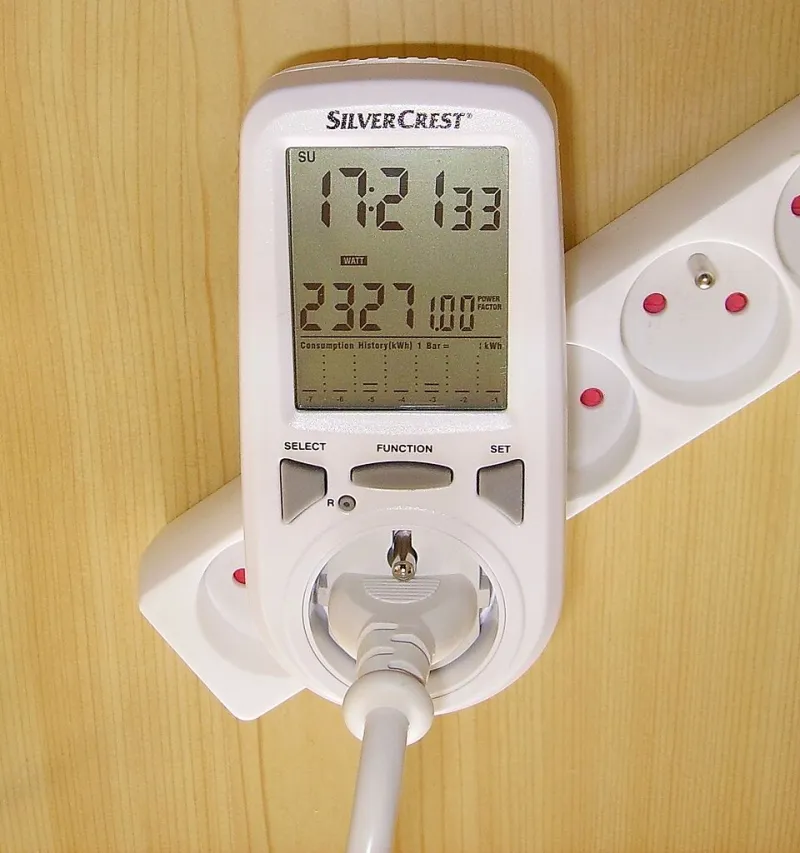
The reference instrument was a single-phase energy logger with a split-core current transformer and a calibration certificate traceable to national standards. It sampled true RMS current and voltage at one-second intervals and aggregated kWh into half-hour buckets aligned to the meter's settlement periods. The meter was the property of the supplier: a second-generation smart meter installed under the SMETS2 framework. The IHD was the supplier's standard unit, showing current usage, daily cost and tariff information. The household had a time-of-use electricity tariff with half-hourly prices, similar in structure to Agile-style products.
The meter is the billing instrument. The IHD is not. That distinction matters because IHDs update at different cadences, round costs, and sometimes lag the meter by minutes. A difference between IHD and logger is not automatically a meter fault; it may be a display convention. A difference between the meter's half-hourly register and a calibrated logger is more serious, because that is the data used for settlement and for time-of-use charging.
Where the numbers agreed
Over the month, daily electricity totals agreed closely. The meter and logger differed by less than 1.2% on 27 of 30 days, and the monthly total differed by 0.9%. That is within the combined uncertainty of a clamp-on reference and the meter's own accuracy class, and it is not a reason for concern. Overnight base load, measured between 01:00 and 05:00, was typically 118 W on the logger and 124 W on the meter, a difference of about 6 W. At an electricity price of 25p/kWh, 6 W continuous is 52.6 kWh a year, or roughly £13. It is small, but it is not nothing if a household is trying to hunt down standby load.
High-load appliances produced the largest short-term differences. A 3 kW immersion heater, a 2 kW kettle and an induction hob were each run in isolation. The half-hour totals agreed within 2-4%, but the instantaneous readings diverged more, especially when the logger's CT was sampled at a different instant from the meter's internal measurement. This is expected. A kettle is a step load; a meter and a logger that do not share a clock will always disagree at the edges of the step.
Where time-of-use tariffs expose the seams
The more interesting divergence appeared at tariff boundaries. A half-hourly tariff changes price on the half hour. If the meter's clock and the logger's clock differ by 20 seconds, a load that starts at 16:29:50 will be split differently between two price periods. Over a month, the cost effect was small: less than £0.40 on a bill of roughly £70. But the kWh effect was visible in the half-hourly data, with occasional differences of 0.05-0.12 kWh in the boundary buckets. For a household shifting a wash or an electric vehicle charge to a cheap window, that is a reminder to schedule with a margin, not to the last minute.
The IHD was less precise. Its daily cost figure differed from the tariff calculation by up to 4%, largely because it rounded unit rates and standing charges and updated at a slower cadence. It was useful for spotting a forgotten immersion heater. It was not useful for auditing a half-hourly tariff.
What divergence means for Agile-style charging
Time-of-use tariffs depend on half-hourly metered consumption being attributed to the correct price period. The smart meter is the source of that data; the supplier receives it through the DCC and applies the tariff. A small clock offset or a rounding difference in the IHD does not change the settlement data. A genuine meter error would, but the month's totals suggest this meter was working within tolerance.
The practical risk for consumers is not usually a faulty meter. It is misreading the display. An IHD showing today's cost may not include standing charge, may use a rounded rate, or may not have received the latest tariff. A consumer who shifts load based on the IHD's instantaneous usage is probably fine. A consumer who checks a bill against the IHD's daily cost and expects a penny-perfect match is likely to be disappointed.
How to sanity-check your own readings
There are several checks a household can do without calling an engineer. First, compare the meter's own register over 24 hours with the IHD's daily total. If they differ by a few percent, suspect display rounding or a missed update before suspecting the meter. Second, use the meter's pulse output if it has one: count the LED flashes over a known period and compare with the kWh register. Third, switch off all known loads at the consumer unit and see whether the meter still records a plausible base load. Fourth, use a plug-in energy monitor for individual appliances; it will not validate the whole meter, but it will tell you whether the fridge is the base load you think it is. Fifth, download half-hourly data from the supplier's app or portal and compare it with your own logger or a manual reading at the same time.
Do not open the meter or interfere with its wiring. If a check suggests a persistent discrepancy, ask the supplier for a meter accuracy test. The meter is their asset and a regulated instrument; it is not a DIY item.
The verdict
A SMETS2 meter and a calibrated logger will not agree to the last watt, and they do not need to. In this test, the meter was close enough on daily and monthly totals to support time-of-use charging, while the IHD was a useful but coarse guide. The larger error for a household is usually in the interpretation: treating a rounded display as a billing record, or shifting load to the exact minute a tariff changes. The smart meter is doing its job. The display is doing a different job. Keeping those two ideas separate is the best sanity check available.