Bench Versus Tarmac: Auditing E-Bike Battery Claims Against a Hilly British Route
The UK's electrically assisted pedal cycle regulations are unusually precise: assistance must taper away at 15.5 mph and the motor may not exceed 250 W of continuous rated output. What the law does not specify is how a manufacturer should describe a battery, and the gap between the label and the pack is where most of the interesting engineering sits. For this audit CavLab acquired a spread of machines sold on the UK market in 2026 — a cadence-sensor hub-drive commuter, a torque-sensor mid-drive trekking bike, a 20-inch folder and a retailer-supplied conversion kit — and put their packs through a repeatable bench sequence before riding a fixed hill route in the Pennine foothills.
Bench architecture and measurement uncertainty
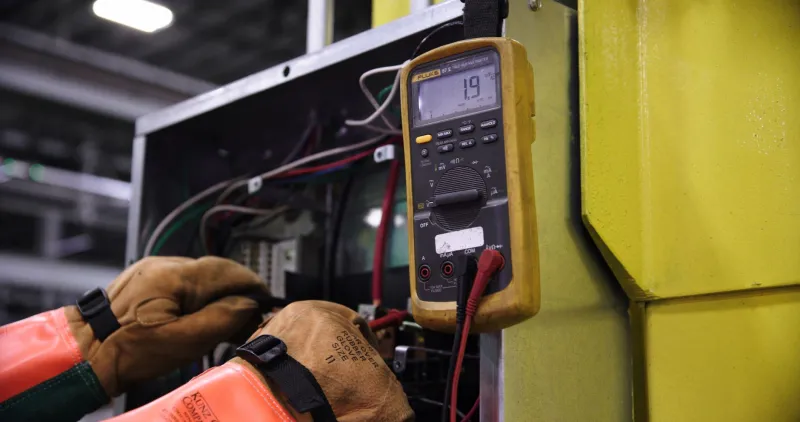
All discharge testing used a programmable electronic load in four-wire configuration, with pack voltage and current logged at 1 Hz through a calibrated shunt and a separate datalogger for cell-group temperatures. Packs were soaked at 20 ±1 °C for four hours before each run. Capacity was obtained by coulomb counting from a full charge to the BMS cutoff, then repeated at 0.5C and 1C to expose rate dependence. Charger tests used a mains power analyser to capture input energy, power factor and the charger's own no-load draw. The bench contributes roughly ±1.5% to a capacity figure; the spread between nominally identical packs is larger than that, which is the first useful finding.
Nameplate watt-hours are a starting point, not a specification
The 36 V, 10 Ah commuter pack is sold as 360 Wh. Coulomb counting gave 322 Wh to cutoff at 0.5C, and 301 Wh at 1C. The shortfall is not fraud: the BMS terminates discharge around 3.0 V per cell rather than the 2.5 V often used in cell datasheets, and a conservative low-voltage cutoff protects cycle life at the cost of the headline number. The mid-drive pack, rated 48 V and 14 Ah, delivered 634 Wh against a nominal 672 Wh. Manufacturer-stated capacity should be read as a gross figure; usable energy is typically 88 to 95% of it, and less in the cold.
Voltage sag: the hidden range thief
Internal resistance was measured by stepping load current and recording the instantaneous voltage drop. At 25 °C the commuter pack sat at roughly 95 mΩ; the folder's smaller pack measured 160 mΩ. At the 15 A a 250 W motor draws on a steep climb, that is 1.4 V and 2.4 V of sag respectively — enough, at 60% state of charge, to trip a controller's low-voltage cutoff well before the pack is empty. Riders experience this as assist fading on the third hill rather than the tenth. Sag worsens with cold and with age; a pack at 80% state of health may lose a further tenth of its usable energy before its cutoff behaviour changes at all.
Chargers and the wall socket
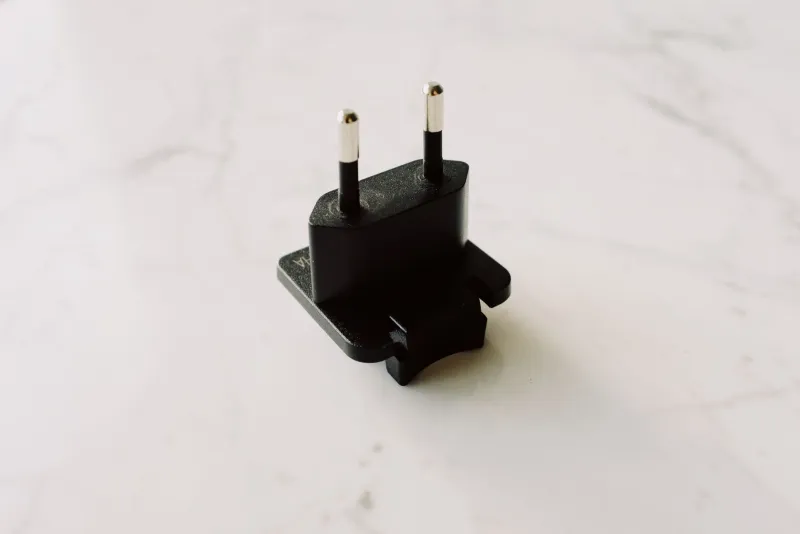
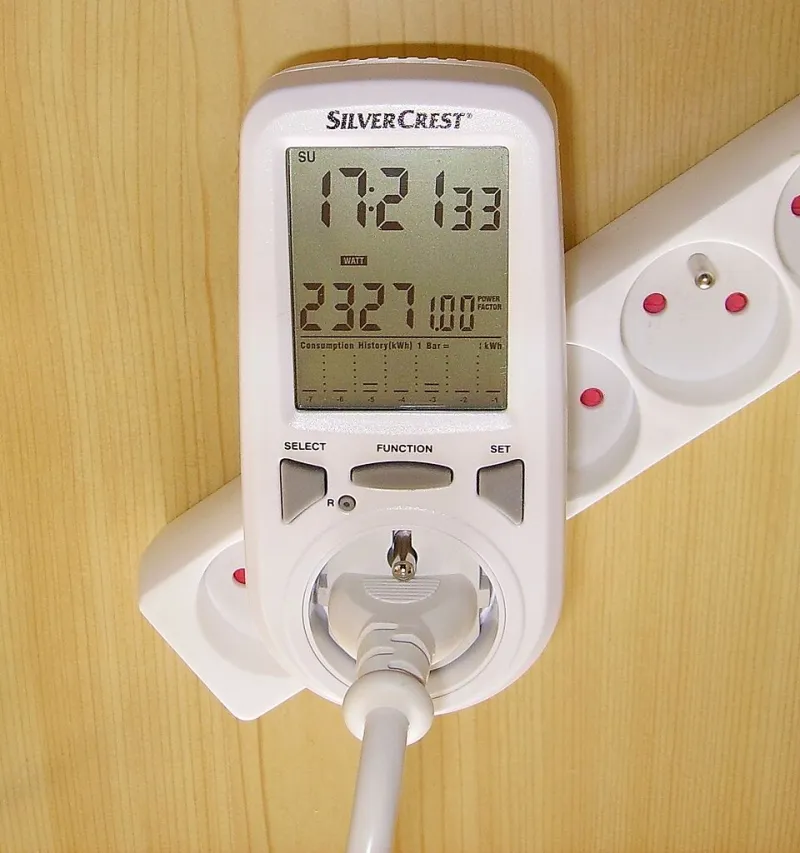
Every charger examined used a conventional constant-current, constant-voltage profile, transitioning at 42.0 V for 36 V packs, with termination currents between 120 mA and 400 mA. Input energy to recharge the commuter pack from cutoff to full measured 0.42 kWh for 0.322 kWh returned to the pack — an overall efficiency near 77%, including the charger's own quiescent draw of 0.6 W when left plugged in. That quiescent figure matters over a year, if only marginally. More significant was balancing behaviour: two chargers terminated without any balancing phase, leaving cell groups divergent by 40 mV after five cycles. All chargers carried a 3 A fuse in the plug, as BS 1363 requires for the flex, and none exceeded 60 °C at the case.
BMS cutoffs and what they hide
The battery management system is where marketing meets protection. Observed low-voltage cutoffs ranged from 2.9 to 3.2 V per cell; overcurrent trips sat between 18 A and 30 A; charge inhibition below 0 °C was present on three of four packs. One conversion kit's BMS had no temperature sensing at all on the discharge path, which is a warranty question as much as a safety one. Cutoff behaviour also shapes perceived range: a pack that tapers gently gives the rider warning, while one that cuts abruptly strands them mid-climb with no assist and a heavier bike than they started with.
Bench numbers against a real route
The road loop was 34 km with 620 m of ascent, mixed tarmac and compacted gravel, ridden at a steady perceived effort by a 78 kg rider in dry conditions at 18 °C, assist level two of four, tyres at the pressures marked on the sidewall. Measured consumption ranged from 11.8 Wh/km for the torque-sensor mid-drive to 17.4 Wh/km for the folder. Translating the bench capacities gives predicted ranges of 54 km and 17 km respectively; the bikes delivered 51 km and 16 km before cutoff. Marketing figures for the same machines, quoted under unspecified conditions, were 90 km and 45 km.
The discrepancy is not mysterious. Advertised range is usually generated on a flat test track at low assist and modest speed, where a 250 W system draws perhaps 6 to 8 Wh/km. Add hills, a heavier rider, headwind and higher assist and the figure roughly doubles. The regulatory 15.5 mph cutoff helps here: above it the motor is doing nothing, so a fit rider on the flat can cover ground without the motor's help and inflate the apparent efficiency of the pack.
What a buyer should ask for
Watt-hours, pack mass and cell format tell you more than a range claim. A 360 Wh pack weighing 2.4 kg implies a particular energy density and, by extension, a particular cell tier. Ask whether the BMS performs cell balancing, what its low-voltage cutoff is, and whether the charger is certified to BS EN 60335. Check that the machine is a genuine EPAC — 250 W, 15.5 mph, no throttle beyond walk-assist — because anything else is legally a moped and needs type approval, insurance and a licence. None of that is exotic engineering. It is simply the difference between a number on a web page and a measurement on a bench.