Condensation and the Clock: What Three Heat-Pump Dryers Cost in Time and Kilowatt-Hours
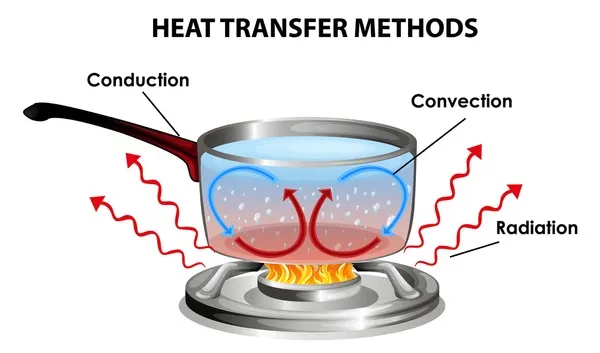
Photo: heat pump tumble dryer laundry room UK winter, via www.shutterstock.com
Heat-pump tumble dryers are sold on a simple proposition: less energy per cycle. In a cold utility room through a wet British winter, that proposition holds, but it arrives with a second clause. The kilowatt-hours fall; the clock stretches. Between January and March 2026, CavLab ran three current-market 8–9 kg heat-pump condensing dryers through a mixed laundry regime, measuring energy, time, room conditions and water collection. The aim was not to crown a winner, but to understand what the low-power promise means in a real British home.
The bench, the basin and the British weather
The three machines were anonymised as Unit A, B and C. All were installed in the same unheated utility room, on the same 1400 rpm spin cycle, and loaded to manufacturer guidance rather than to the drum’s limit. Each load was weighed dry, washed, spun and then dried to a cupboard-dry setting; towels were given the extra-dry programme where the machine offered one. A calibrated energy logger recorded cumulative kWh per cycle. A separate temperature and relative-humidity logger sat at mid-room height, away from the exhaust and the door.
The room was not laboratory-controlled. That was deliberate. Over the test period, ambient temperature ranged from 11.8 °C to 16.4 °C and relative humidity from 54% to 78%. Those are ordinary conditions for a British utility room, garage conversion or unheated annexe, and they matter to a heat-pump dryer more than the glossy label suggests.
Loads were grouped into four families: cotton bedding, bath towels, mixed cottons, and synthetics. Each machine saw each family at least three times. Energy was normalised by dry weight to give kWh per kilogram, and cycle time was recorded from start to the machine’s own end signal.
What the meter saw
Across the mixed-load average, the three units returned 0.31, 0.34 and 0.37 kWh per kilogram of dry laundry. Manufacturer cycle claims for comparable cottons clustered lower, around 0.23–0.30 kWh/kg, and the gap was largest in cold-room conditions. Towels were the worst case: 0.45–0.55 kWh/kg and cycle times from 3 hours 10 minutes to 4 hours 5 minutes. Synthetics were the best: 0.22–0.30 kWh/kg, often finishing in just over two hours.
Instantaneous power was modest throughout. The dryers rarely exceeded 650 W and often settled around 350–450 W once the drum and compressor had stabilised. That is the quiet engineering appeal of the heat pump: no 3 kW element, no sudden demand spike, and a load that can sit comfortably on a domestic circuit or behind a battery. But low power is not the same as short work. A 3.8 kg towel load in Unit A consumed 1.8 kWh over 3 hours 50 minutes. Unit C used 1.95 kWh over 4 hours 5 minutes for a similar load. The energy was reasonable; the afternoon was gone.
Time is part of the energy story
Heat-pump drying is a closed-loop heat-moving process, so its performance depends on the temperature lift it must achieve. In a 12 °C room, the machine has to warm the drum, the laundry and its own working fluid from a lower starting point. Below roughly 15 °C, all three units took 15–25% longer than they did in the warmer part of the test period. Unit B was the least sensitive, but it was also the slowest in warm conditions.
This is where the published energy figure can mislead. A cycle claim is usually tied to a standard load and a standard ambient. A British utility room in February is not that standard. The measured penalty was not dramatic in kWh terms, perhaps 8–14% on the same load, but it was very visible in time. For households drying several loads on a wet weekend, the queue becomes the constraint rather than the meter.
Condenser, room and water
The dryers are condensing machines, so most of the moisture ends up in a collection tank or drain hose rather than in the room. In practice, the room logger still recorded a rise of 6–12 percentage points in relative humidity during a cycle, and a temperature rise of 1.5–3 °C. That is not a failure of the heat-pump principle; it is what happens when a door is opened, a tank is emptied, and a machine is not perfectly sealed. In a small room with poor ventilation, the effect is noticeable.
Water collection varied from 1.2 to 2.1 litres per load, with towels at the top of that range. Tank capacity was 2.5–3.2 litres depending on the unit, so a towel cycle could leave the tank close to full. All three machines stopped or refused to start when the tank was full, which is sensible but easy to overlook in a busy household. The condenser filter needed cleaning more often than the manuals implied, particularly with towels and bedding. A partially blocked condenser added roughly 10–15% to cycle time in our checks.
Lint, maintenance and the quiet cost
Lint was collected on every cycle, as expected. The more important finding was how quickly the condenser path gathered fibres in the towel regime. Units with a removable condenser cassette were easier to rinse; the one with a fixed exchanger required a longer brush-out. None of this is difficult work, but it is part of the ownership cost. A heat-pump dryer that is never maintained will still be quiet and low-power, but it will not be efficient.
The same applies to loading. Overfilling the drum extended cycles and left damp patches that encouraged a second run. Underloading wasted capacity but did not improve kWh/kg much. The practical sweet spot was around 60–70% of the rated drum weight for cottons, and closer to 50% for towels.
The verdict in kilograms
Heat-pump drying is not a myth. The three machines used materially less energy per kilogram than a conventional resistive dryer would be expected to use, and they did so while drawing less than a kettle. For a household with solar PV, a time-of-use tariff or a battery, that low, flexible load is genuinely useful. The caveat is time. In a cold British room, a wet winter’s laundry becomes a scheduling problem as much as an energy problem.
The right question is not simply how many kilowatt-hours per kilogram a dryer claims, but how many hours per kilogram it needs in the room you actually have. On that measure, the quiet low-power promise is real, and so is the long afternoon.