Load, Heat and Paperwork: Measuring a 7.4 kW EV Charger on a Legacy Consumer Unit
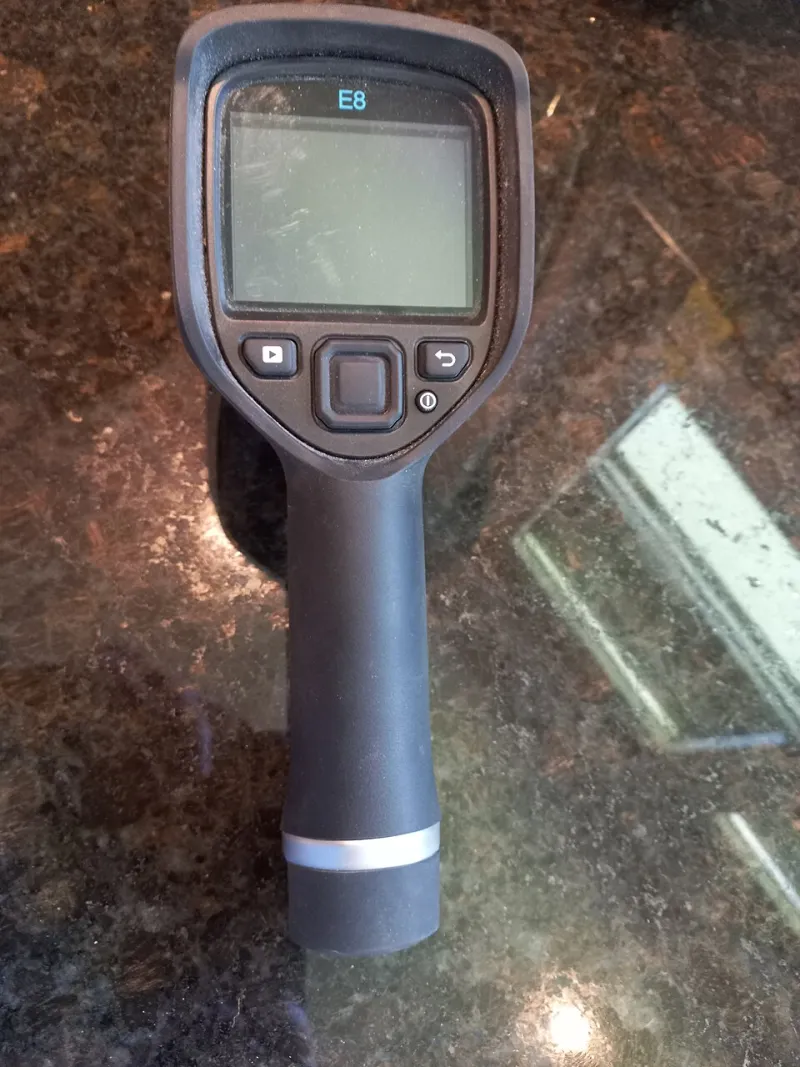
Photo: Asurnipal, CC BY-SA 4.0, via Wikimedia Commons
A marathon load in a sprint-load house
Most domestic electrical loads are brief. A kettle draws 3 kW for two minutes; an oven cycles; a shower runs for ten. A 7.4 kW EV charger is different. It holds roughly 32 A for hours, often overnight, when the house is quiet and the consumer unit is warm from its own baseline losses. That makes it an unusual test for an older board.
At CavLab we wanted to compare the assumptions behind a standard domestic installation with what a charger actually does over a series of overnight sessions. The answer was reassuring in the main, but not uniformly so. The interesting findings were at the edges: a warm neutral connection, a longer-than-ideal cable run and a diversity calculation that relied more on behaviour than on hardware.
The house and the hardware
The test house was a 1970s semi-detached property in the Midlands with a 100 A DNO fuse. The consumer unit was a 1990s plastic enclosure with MCBs, a mixture of original and later additions, and a spare way used for a dedicated 40 A MCB feeding the charger. The charger had an integrated Type A RCD with 6 mA DC detection. The supply cable was 6 mm² T&E over a route of approximately 22 m.
This is not a recommendation, nor a template. It is a sample of the installed base. The work had been signed off by a competent person under BS 7671. Our instrumentation was separate: a clamp logger on the line conductor, voltage logging at the charger terminals, contact temperature probes on the MCB and cable, and a thermal camera used before and after each session. We logged six overnight charges, starting between 23:00 and 00:30, with ambient temperatures between 4°C and 11°C. The state of charge at start was between 25% and 45%.
Thermal: calm numbers, one loose end
After four hours at 31.6 A, the new MCB's front face reached 32°C in an 18°C ambient: a rise of about 14 K. The 6 mm² cable surface, clipped to a cool wall, reached 26°C. The charger's own terminals were 29°C. Thermal imaging showed the expected warm busbar and a warm MCB, but nothing that approached a concerning surface temperature.
The highest reading was not the new MCB. It was an old 30 A fuse carrier still in service for an immersion heater, which reached 44°C when the immersion ran during a top-up charge. That is within the range one might expect for a loaded fuse carrier, but it was a useful reminder that an EV charger does not exist in isolation. The board is a system.
More significantly, the thermal image showed a 7 K differential across a neutral connection. An electrician re-torqued it. That was not a charger fault and not necessarily an immediate danger, but it was exactly the kind of finding that a paper certificate does not record. A scheduled inspection might have caught it; a thermal image made it visible.
Voltage drop: the number the certificate rarely shows
At no load, the voltage at the charger terminals was 240 V. At 31.8 A it fell to 230.5 V: a drop of 9.5 V, or about 4% of the baseline. A 22 m run of 6 mm² cable calculates to roughly 5 V at 32 A; the remainder comes from supply impedance and internal wiring.
That is within the 5% guidance commonly applied to power circuits in BS 7671 Appendix 4, but it is not a comfortable margin if the run were longer or the supply weaker. On a 40 m run, 6 mm² would be marginal; 10 mm² would be the conversation. The point is not that 6 mm² is wrong. The point is that a sustained 32 A load exposes assumptions that a short-duration load would hide.
Diversity: the assumption behind the paperwork
Maximum demand calculations assume that not everything is on at once. That is a statistical idea, not a guarantee. We logged the whole-house load alongside the charger. The base load was 0.3–1.1 kW; charging added about 7.2 kW. In our sessions, no shower, cooker and charger ran simultaneously for long periods. That was partly scheduling and partly luck.
On a 100 A supply, a 7.4 kW charger plus normal domestic loads is unlikely to be a problem. On a 60 A supply, it can be. A 32 A charger and an 8 kW electric shower are not diverse; they are a problem waiting for a cold morning. DNO notification, a supply upgrade or load management is the responsible route. We tested a derated session at 6 kW using the charger's load-management setting; the voltage drop and thermal rise both fell as expected. That is not a substitute for a proper assessment, but it shows why load management is more than a marketing feature.
What the paperwork does not capture
An installation certificate records earth loop impedance, RCD trip times and insulation resistance. It does not record a four-hour thermal profile, voltage drop at sustained current, or the condition of an old busbar behind a plastic cover. For a new circuit in an old board, a thermal image before and after commissioning is cheap evidence. It is not a substitute for inspection and testing, but it shows what the forms cannot.
Older consumer units deserve closer inspection for reasons that have nothing to do with EV charging: retrofitted MCBs, undersized busbars, corrosion, rodent damage and loose terminals. A 7.4 kW load does not create those problems, but it does exercise them for longer.
The verdict
Real-world behaviour matched the paperwork where the installation was sound. No breaker exceeded its rating, no cable approached its tabulated current-carrying capacity, and the RCD did its job. The divergences were at the edges: a warm neutral, a long cable run and a diversity assumption that relied on behaviour rather than hardware.
A 7.4 kW charger is not a reason to condemn an older consumer unit, and an older consumer unit is not automatically unsafe. The interaction is what needs measuring. The load is patient. The installation should be, too.