Two Kilowatts of Hope: What Smart Kettles Actually Do With a Litre of Water
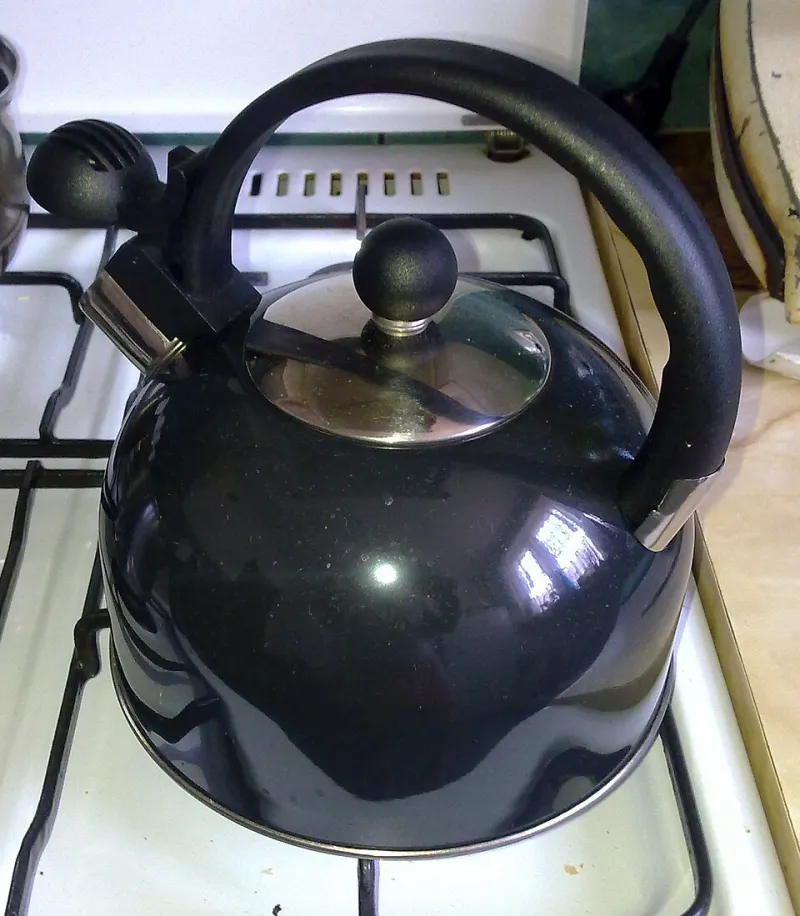
Photo: Grzegorz W. Tężycki, CC BY-SA 4.0, via Wikimedia Commons
There is a particular kind of optimism in the smart-kettle aisle. A box promises scheduled boiling, precise temperatures for green tea, and a voice assistant that will start the water before you have taken your coat off. What it rarely promises is a number: how much energy a litre actually takes, how much the radio costs while the kettle sits idle, or whether the 70 °C setting delivers 70 °C. That is the gap this test set out to close.
Bench first, kitchen second
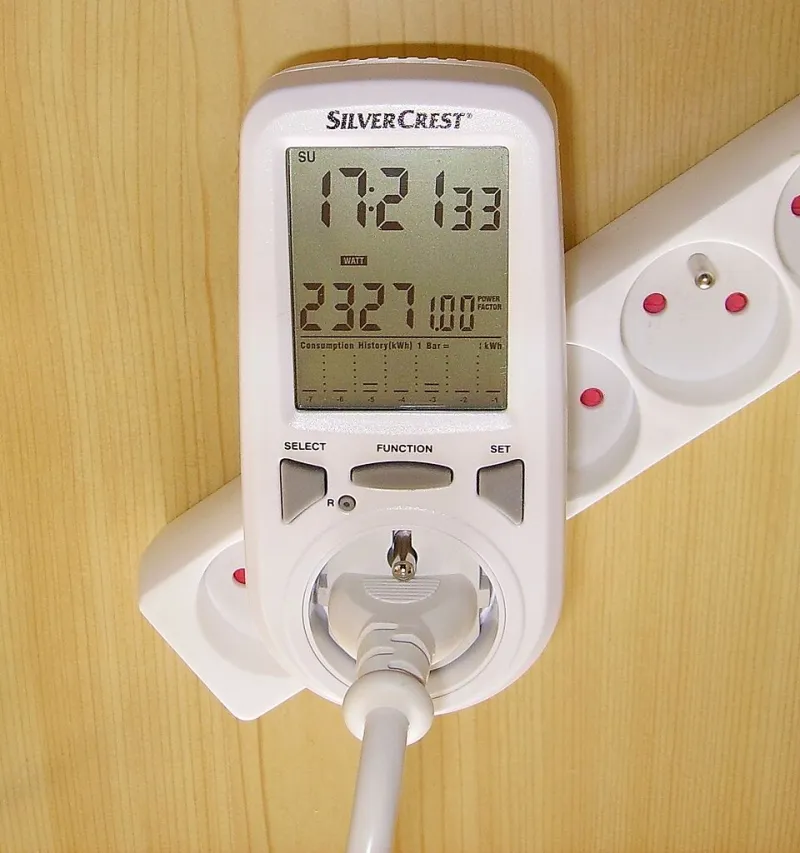
All measurements ran through a calibrated power analyser with a 0.5% energy accuracy claim, logging at one-second intervals, with a Type K thermocouple suspended in the water and a second probe taped to the element plate. Mains voltage sat between 236 V and 244 V across the test window, which matters more than most reviews admit. A resistive element rated at 3 kW at 240 V delivers roughly 2.9 kW at 236 V and 3.05 kW at 244 V, so a kettle that looks sluggish may simply have been tested at teatime on a cold, high-demand evening in a cul-de-sac full of heat pumps.
We tested four connected kettles and one non-connected control, all from the same starting conditions: one litre of water at 15 °C, lid closed, no pre-warming, freshly descaled. The theoretical floor is easy to calculate. Raising a kilogram of water by one kelvin takes 4.186 kJ, so 85 K over a litre is 356 kJ, or 98.8 Wh. Everything above that is loss — steam, the body of the jug, the base plate, the cable, the patience of the person waiting.
The energy-to-boil figures
The best performer used 104 Wh to reach a rolling boil, an efficiency of about 95% against the theoretical minimum, which is close to the practical limit for a jug element. The worst used 121 Wh. The difference was not the electronics. It was the geometry of the base and how much of the element stayed covered at the one-litre mark. A tall, narrow kettle that leaves part of the element in air at low fill will always lose more heat to the room, and no app will tell you that.
The non-connected control — a £20 3 kW jug with a mechanical switch — used 106 Wh and came second. It has no firmware, no account, and no opinion about your tea.
Standby: the cost of being reachable
Here is where connected design starts charging rent.
| Model | Idle draw after 30 min | Annual energy (idle) | Cost at 26p/kWh |
|---|---|---|---|
| Connected, Wi-Fi on | 0.9–1.8 W | 7.9–15.8 kWh | £2.05–£4.10 |
| Connected, Wi-Fi off | 0.3 W | 2.6 kWh | £0.68 |
| Non-connected jug | 0.0 W | 0 kWh | £0.00 |
None of those figures is ruinous. The point is structural: the feature is paid for every hour of the year, not only when someone wants a cup of tea. Two of the four models dropped to about 0.3 W with the radio disabled, which confirms that the Wi-Fi stack, not the display, is the dominant load. One model reconnected itself overnight after a router reboot, which is either reassuring or a reminder that you do not fully control the device you bought.
Keep-warm is worse than standby, and less discussed. Holding one litre at 80 °C for thirty minutes consumed between 38 and 61 Wh on the models tested. That is comparable to a fresh boil of a third of a litre, and it frequently costs more than simply reboiling when you next want tea. The feature is genuinely useful in an office where the kettle is emptied continuously. In a two-person household it is a small, permanent subsidy to lukewarm water.
Temperature claims and the minimum-fill problem
A claimed 70 °C setting delivered between 66.4 °C and 72.1 °C at the thermocouple, measured at the moment the app declared the target reached. The spread is considerably wider than the ±1 °C the interfaces imply. The cause is placement: a probe bonded to the base reads the element and the boundary layer above it, not the bulk of the water, and the bulk is what you pour.
Minimum fill is the other quiet inaccuracy. One model claimed a 250 ml minimum and dispensed between 210 and 290 ml depending on how the jug was tilted and how much scale had built up on the element. On a hard-water site — we tested in a Kent postcode at roughly 280 mg/l as calcium carbonate — limescale added about 8% to boil times after sixty litres of use. The app counted litres boiled. It did not mention that each of them was getting slower.
What survives contact with a British cuppa
Scheduling works, and pairs well with an off-peak tariff if you genuinely boil at 05:30. Temperature control is worth having only if you verify it once with a thermometer and adjust your expectations accordingly. Voice control is a novelty with a measurable standing cost. The most useful connected feature turned out to be the dullest one: a boil-dry interlock that reports a fault instead of silently refusing to heat, plus a keep-warm that can be configured to switch itself off after ten minutes.
The verdict
Buy on the jug, not the app. A well-shaped 3 kW element, a clear water gauge and a flat base that keeps the element submerged at 250 ml will beat a mediocre kettle with an excellent dashboard every time. Connected features are a garnish: pleasant, occasionally useful, and paid for by the hour.