A Question of Timing: Ten Residual Current Devices on the Bench, and What Their Curves Do Not Say
A residual current device is often treated as a binary component: it either works or it does not. On a bench, that shorthand falls apart quickly. Trip time is a distribution, not a single number, and the shape of that distribution depends on the device, its age, the test current and the presence of a DC component. This audit looked at ten devices drawn from UK domestic and light-commercial stock — six RCBOs and four older RCDs — and measured them against the limits in BS EN 61008 and BS EN 61009. The aim was not to declare winners and losers, but to understand what a late trip actually means.
The bench, the standard and the difference between a pass and a promise
The standards set maximum break times at defined multiples of rated residual operating current, usually written as IΔn. For a conventional AC residual current device, the familiar envelope is 300 milliseconds at 1×IΔn, 150 milliseconds at 2×IΔn and 40 milliseconds at 5×IΔn. Those figures are maxima, not targets. A device that trips in 28 milliseconds at five times its rating and one that takes 38 milliseconds are both inside the envelope, but they are not identical in behaviour.
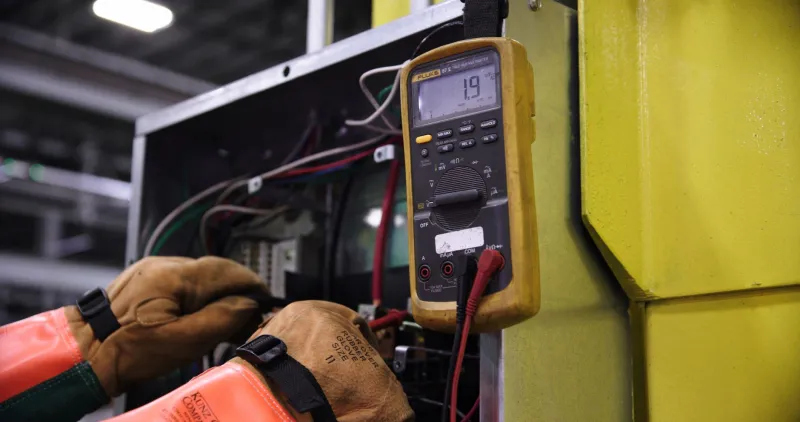
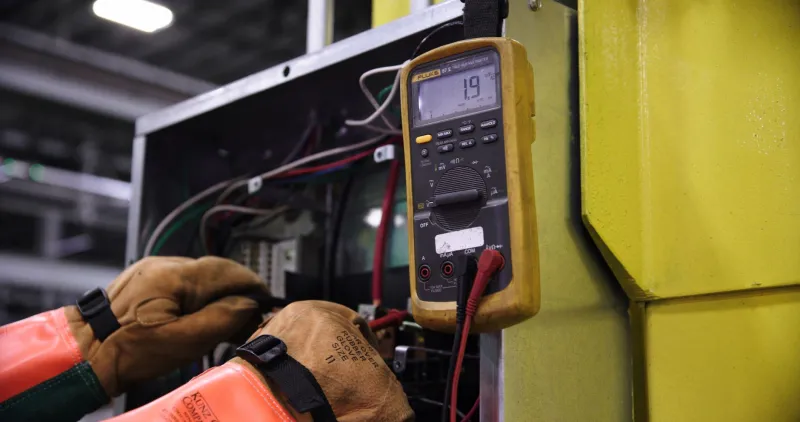
Each device was mounted in a test rig with a calibrated residual current source and a timing circuit that recorded the interval between current application and contact separation. The test sequence was repeated at 1×, 2× and 5×IΔn, with a rest period between shots. A second pass introduced a controlled smooth DC component into the residual current. This matters because Type AC devices are not intended to respond reliably to smooth DC residual current, while Type A devices are designed to cope with it. The distinction is printed on the device, but it is easily overlooked in a consumer unit where every RCD looks much the same.
What ten devices did when asked to break
At 5×IΔn, the sample was reassuringly consistent. Every device operated well inside the 40-millisecond limit, and the spread between the fastest and slowest was small enough to be explained by mechanism design rather than by obvious deterioration. At 2×IΔn, most devices sat comfortably within 150 milliseconds. One older RCD was slower than its peers but still inside the limit, and one RCBO produced a single outlier reading that did not repeat. That outlier is worth noting: a single late trip on a bench is a prompt to test again, not a conclusion.
The 1×IΔn results were where the sample became interesting. Several devices operated in the low hundreds of milliseconds, which is normal. One older RCD exceeded the 300-millisecond window on its first attempt and then passed on a repeat. Another device was erratic across repeats, sometimes operating promptly and sometimes hesitating. Neither result justifies the phrase “failed” without qualification. A late trip at 1×IΔn is a warning about margin, not a verdict on the device’s entire life. At 2× and 5×, the same devices still had enough authority to break. The practical question is whether that margin will survive another few years of thermal cycling, dust and contact wear.
The DC component changed the picture more sharply. With a smooth DC offset applied, several Type AC devices showed extended trip times or failed to operate within the test window. Type A devices were less affected. This is not a laboratory curiosity. Modern homes increasingly contain electronics, LED drivers, inverters and battery systems, and the residual current in a circuit is not always the clean sinusoid assumed by a simple test button. A device can be electrically healthy and still be the wrong type for the installation.
Ageing consumer units and the nuisance question
A late trip and a nuisance trip are different complaints, and conflating them leads to bad decisions. Nuisance tripping is usually a question of cumulative earth leakage: several circuits each contributing a small current until the total crosses the device’s threshold. A device that trips early under test is not necessarily the villain; it may simply have less headroom than the installation requires. A device that trips late is the opposite problem: it may leave a fault connected for longer than the standard intends.
Ageing affects both. Contacts oxidise, mechanisms stiffen, and the test button — which is a mechanical and electronic check of the device’s internal operation — does not prove that the device will trip at the correct current in a real circuit. Nor does it prove that the installation wiring is sound. In older consumer units, the device may be the most visible safety component, but it is not the only one that determines outcomes.
What a socket tester can and cannot tell you
A cheap socket tester is useful for identifying reversed polarity, a missing earth or a miswired ring final. It is not an RCD tester. It cannot measure trip time, it cannot apply a calibrated residual current, and it cannot tell you whether a device will operate within the limits of BS EN 61008 or BS EN 61009. Pressing the test button is a functional check, not a measurement. For a real assessment, the device needs a calibrated ramp test or timed test at defined currents, and the results need to be read against the standard and against the installation’s intended use.
The bench audit did not produce a simple league table. It produced a more useful picture: most devices will break quickly at high fault currents; the differences appear at the threshold, where age, type and DC content matter. A late trip is a signal to investigate, not a reason to panic. In a 2026 installation with more power electronics than the device’s designers may have anticipated, the more important question is often whether the RCD is the right type — not merely whether it still clicks.