The Arithmetic Between Two CTs: Four Weeks of a 5 kWh Battery in a Cold Hallway
A 5 kWh domestic battery is a modest object. The unit we audited — a 5.2 kWh LFP cabinet with a 3 kW hybrid inverter, AC-coupled to the existing consumer unit — occupies less space than the vacuum cleaner it displaced from the under-stairs cupboard of a Victorian terrace in Leeds. It has a fan, a pair of DC cables, a data connection and a habit of humming for eleven seconds at a time. Over four weeks in October and November 2026 we watched it with two calibrated current transformers, a Modbus link into its inverter, and the household's own SMETS2 meter. The question was not whether it works; it plainly does. The question was how much of the advertised performance survives contact with a British autumn.
The cupboard, the clamps and the counter
The installation is unremarkable and deliberately so: a two-storey terrace, a 100 A single-phase supply, a legacy split-load consumer unit with the battery fed from a 32 A MCB via a dedicated sub-main. The cupboard sits off the hallway, unheated, with a mean ambient of 14.1 °C across the period, a minimum of 10.8 °C on the coldest night and a maximum of 17.6 °C after a long discharge. Nothing exotic.
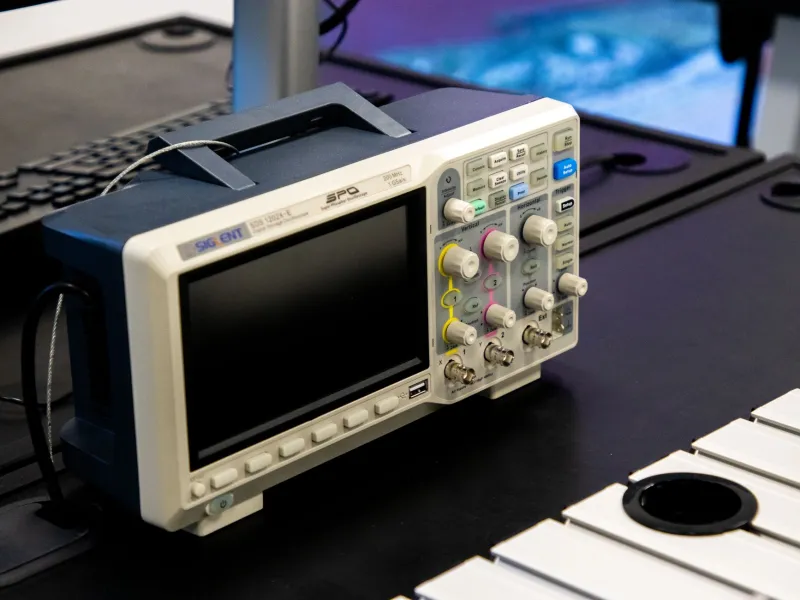
Measurement was straightforward but needed care. A class 1 split-core CT on the battery's dedicated supply, sampled at 1 Hz and aggregated to one-minute energy totals, gave charge and discharge separately by direction. A second CT on the incoming tails provided the household baseline and allowed us to confirm that nothing else was drawing on the battery circuit. Both CTs were checked against a reference meter at 5 A, 15 A and 25 A resistive loads; the worst-case deviation was 0.7 per cent of reading with a phase error small enough to ignore at these power factors.
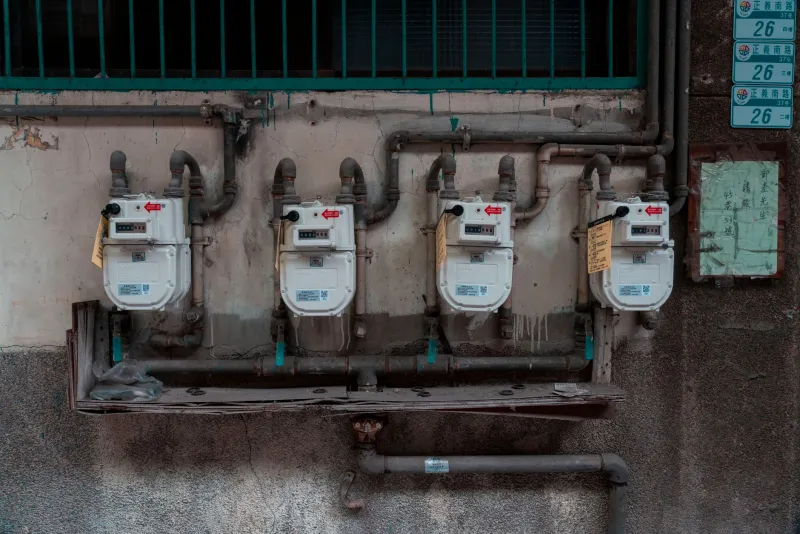
The SMETS2 meter provided the independent check that matters most, because it is the instrument the supplier actually bills from. Its 30-minute registers, with a resolution of 1 Wh, were pulled through the consumer-facing API and reconciled daily. The two datasets agreed to within 1.4 per cent over the period — close, but not identical, and the gap is instructive rather than alarming.
What "round trip" leaves out
The datasheet claims 94 per cent round-trip efficiency. That number is real, but it is a DC-to-DC figure, measured at 25 °C, at half rated power, with the inverter's own auxiliary loads excluded. From the meter's point of view none of those conditions apply.
Measured over 28 days, the battery absorbed 158.3 kWh of AC energy and returned 128.9 kWh. That is an AC-to-AC round trip of 81.4 per cent. The SMETS2 registers independently recorded 157 kWh in and 128 kWh out, or 81.5 per cent — a reassuring convergence, and a long way from 94.
Part of the shortfall is not inefficiency at all but arithmetic. The 94 per cent figure describes the cell and convertor path; it says nothing about the 19.4 W the unit draws while resting, nor about the thermal management that runs a fan for four minutes after every cool-down. Those are loads, not losses, and they are paid for either from the battery or from the grid depending on state of charge.
The loss budget
Breaking the 29.4 kWh of missing energy into its components, we get the following, with uncertainties dominated by CT phase error at low currents:
| Component | Energy (kWh) | Share of input |
|---|---|---|
| AC in | 158.3 | — |
| Conversion (rectifier + inverter) | 17.6 ± 0.6 | 11.1 % |
| Idle/standby draw | 9.6 ± 0.4 | 6.1 % |
| BMS, fans, auxiliaries | 2.2 ± 0.2 | 1.4 % |
| AC out | 128.9 | 81.4 % |
Standby is the item most often omitted from the sales conversation and the one most likely to annoy a careful owner. At a measured 19.4 W mean in the rest state — a state the unit occupied for 61 per cent of clock hours — the battery consumed 9.6 kWh doing nothing. That is roughly the energy needed to run a fridge for a fortnight, and it is a fixed tax on the arbitrage described below.
Cold cells and light loads
Cell behaviour was measured from the BMS over CAN. At a cell temperature of 20 °C the DC round trip came out at 96.4 per cent; at 12 °C, which the cupboard reached most nights, it fell to 94.9 per cent. The delta is modest but real, and it compounds with the second effect: efficiency at low power.
Discharging at 400 W — typical of a house with LED lighting, a router and a television — the conversion efficiency fell to 91.2 per cent, against 95.0 per cent at 2 kW. A battery sized for a heat-pump household spends much of its life in the efficient band; one sized for a low-demand terrace spends it in the poor one. This is a sizing issue as much as an engineering one, and it deserves more prominence in installer guidance than it currently receives.
The tariff arithmetic
The household is on a two-rate time-of-use tariff: 6.9p/kWh between 00:30 and 05:30, and 25.6p/kWh at all other times. The battery charged a mean of 5.65 kWh per night and delivered 4.60 kWh the following day, of which 71 per cent fell within the 16:00–19:00 window the household actually wanted it.
Taking the counterfactual seriously — what those 4.60 kWh would have cost if imported at the time they were actually consumed, weighted across the day — the displaced rate is 24.3p/kWh. On that basis:
- Cost of charging: 5.65 × 6.9p = 39.0p
- Value of displaced import: 4.60 × 24.3p = 111.8p
- Net daily benefit: 72.8p
Across 28 days that is £20.38, or something close to £265 annualised. That annualisation should be treated with suspicion: November is close to the best case for arbitrage in a house without solar, because evening demand is high and the off-peak window is long relative to consumption. It is also close to the worst case for efficiency, because the cupboard is cold and the cycle depth is high.
Two further caveats. On nine of the 28 days the state of charge never fell below 20 per cent, because evening demand was light; on three days it reached the 10 per cent floor before 21:00, forcing imports at peak rate. And on six days the battery did not fully recharge, not because the window was too short — five hours at 3 kW is 15 kWh, ample for a 5 kWh pack — but because the unit throttled charging as cell temperature dropped below 12 °C.
What the meter does not say
There are limits to what a SMETS2 meter can tell you, and they matter for anyone trying to replicate this. Its registers are half-hourly, so a 40-second burst of 3 kW discharge is smeared across thirty minutes. Its resolution is 1 Wh per register, which is fine in aggregate but noisy at the margins of a standby measurement. And the meter's clock, while disciplined, drifts by up to 20 seconds relative to the inverter's, which slightly misaligns the charge and discharge windows when you difference the registers directly.
The CT method is more granular but has its own blind spots: phase error grows at low power factor, and the inverter's own consumption when in a deep sleep state is below the noise floor of the clamp. We treat the 81.4 per cent figure as accurate to about ±0.5 percentage points, and the standby figure to ±0.4 W.
What survives the winter
The honest summary is this. The battery does what it says on the box, provided you read the box carefully. The 94 per cent figure is a laboratory number describing a different question from the one the household is asking. The real AC-to-AC figure, in a cold cupboard, at the loads a Victorian terrace actually presents, is nearer 81 per cent. Standby draw eats roughly a third of the total losses and is invisible in every marketing document we have seen.
And the arbitrage is real but thin. Seventy-odd pence a day is not nothing; it is also not the four-figure annual saving that appears in some quoted payback calculations. A household with a heat pump, a car charged overnight, or a higher peak-to-off-peak spread will do better. A household like this one — 9.8 kWh a day, a gas boiler, a battery in a hallway cupboard — should expect the savings story to be told in hundreds of pounds, not thousands, and should expect the winter to take its cut.